The International Standard Atmosphere (ISA), explained
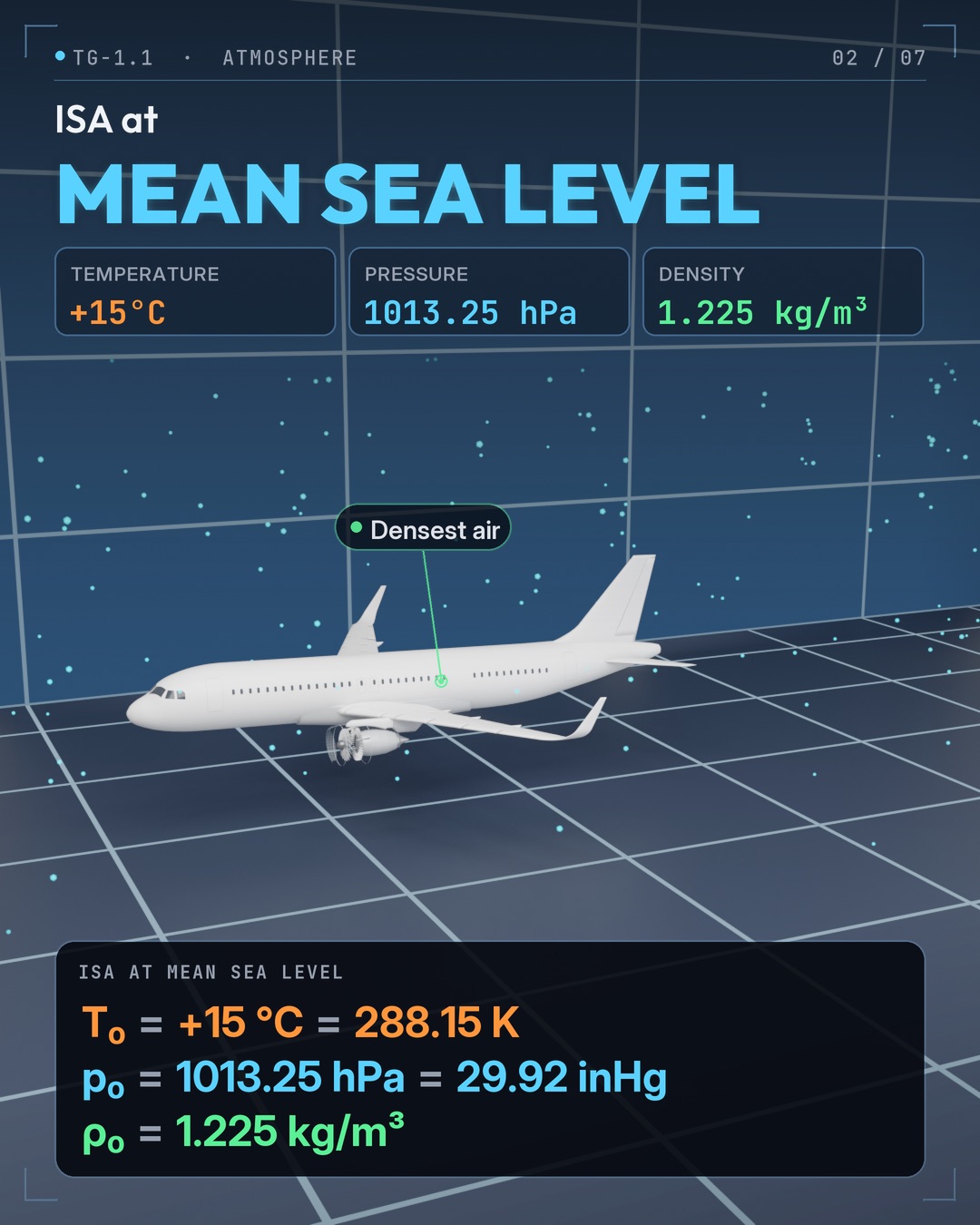
The International Standard Atmosphere is one agreed model of the air that pilots, engineers and instruments all use as a common reference. At mean sea level it is 15 °C, 1013.25 hPa and 1.225 kg/m³, and temperature falls about 2 °C per 1,000 ft up to the tropopause at 11 km.
In plain words
Real air changes every day. Aircraft performance and instruments need one common reference, so we use the ISA. It assumes dry air that behaves as a perfect gas.
In the troposphere, ISA temperature falls 6.5 °C per kilometre, which is about 2 °C per 1,000 ft. The tropopause is at 11 km, about 36,000 ft. Above it, up to 20 km, temperature stays at minus 56.5 °C.
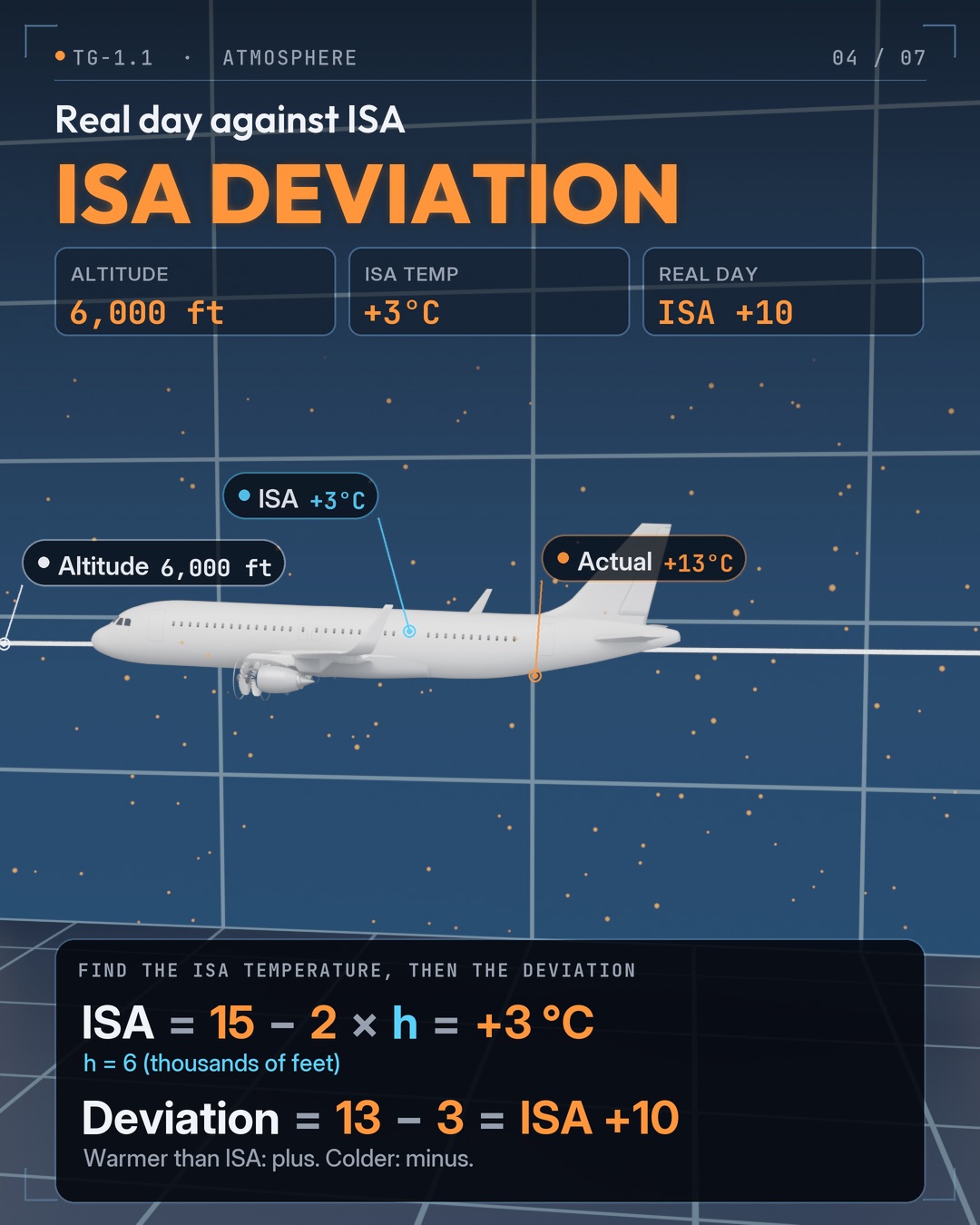
To compare a real day with the ISA, find the ISA temperature first. Start at 15 °C and take off 2 °C per 1,000 ft. At 6,000 ft, ISA is plus 3 °C. If the real temperature is plus 13 °C, the day is ISA plus 10.
The ideal gas law links pressure, density and temperature. At the same pressure, warmer air is less dense. As you climb, pressure and temperature both fall. Pressure falls faster, so density still falls.
The airspeed indicator shows IAS. Correct it for instrument and position error to get CAS. Correct CAS for compressibility to get EAS. Correct EAS for density to get TAS, the real speed through the air. Climb at a constant IAS and the air gets thinner, so TAS rises.
Key numbers
- Sea level temperature
- +15 °C (288.15 K)Source: U.S. Standard Atmosphere 1976 (NASA-TM-X-74335), same as ICAO ISA to 32 km
- Sea level pressure
- 1013.25 hPa (29.92 inHg)Source: U.S. Standard Atmosphere 1976
- Sea level density
- 1.225 kg/m³Source: U.S. Standard Atmosphere 1976
- Lapse rate in the troposphere
- 6.5 °C per km, about 2 °C per 1,000 ftSource: U.S. Standard Atmosphere 1976
- Tropopause
- 11 km, about 36,000 ft, -56.5 °C to 20 kmSource: U.S. Standard Atmosphere 1976
Try the free lesson
3D clips, free, no sign-in. Your email unlocks the check questions and the full practice set.
Free lessonJoin freeQuestions
What is ISA temperature at sea level?
Plus 15 °C, which is 288.15 kelvin.
What is ISA pressure at sea level?
1013.25 hPa, or 29.92 inches of mercury.
How fast does ISA temperature fall with height?
6.5 °C per kilometre in the troposphere, about 2 °C per 1,000 ft, up to the tropopause at 11 km.
What does ISA plus 10 mean?
The real temperature is 10 °C warmer than the ISA temperature at that height. At 6,000 ft ISA is plus 3 °C, so plus 13 °C there is ISA plus 10.
Why does TAS increase when you climb at constant IAS?
The air gets thinner. To make the same dynamic pressure in thinner air, the aircraft must move faster through it, so TAS rises.